
Introduction
Below are "Frequently Asked Questions" we receive rom the general public. Questions are displayed in no particular order.
To view an answer to a frequently asked question, click on the question below, to expand/display the answer to that question.
Around the House
Relatively calm water that stays around for at least 4 days is an absolute necessity for the mosquito lifecycle. The good news is that anything that you can do to interrupt this process can stop mosquitoes in their tracks. The bad news is that it only takes a little water (as little as 1/4 of an inch), a little food (almost any organic material will do) and a little time (in the right conditions, they can go from egg to adult in 4 days) to produce mosquitoes. The goal should be to eliminate places where mosquitoes can develop and minimize your exposure to them.
Eliminate Water Sites
Any container that can hold a quarter inch or more of water is a potential development site. Make sure to dump out any containers that hold water, buckets, tires, children's toys, etc.
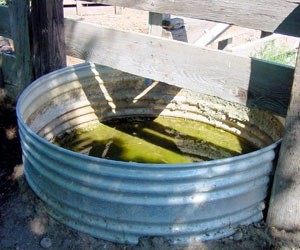
Change watering dishes or troughs at least twice a week.
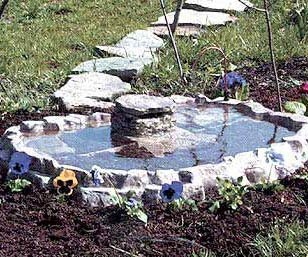
Birdbaths and decorative ponds can be producers of mosquitoes. Either change the water out twice a week or take steps to keep the water moving and agitated. Mosquitoes need relatively stagnant water but can survive minor agitation and flow.
Leaky faucets and hoses can lead to puddles that may turn into mosquito sites.
Roof gutters should also be checked and cleaned so that water-retaining sites do not form.
Other Protective Steps
Make sure all your door and window screens are in good shape. Use screened windows and doors as opposed to wide open ones that allow insects (including mosquitoes) to enter.
The best way to eliminate mosquitoes is to get rid of their breeding habitats. Mosquitoes look for any standing water to lay their eggs and most backyards have a variety of sites where they can flourish. Check your yard frequently for anything that could hold water. Below are some of the common mosquito-breeding locations along with solutions:
Landscapes Ponds
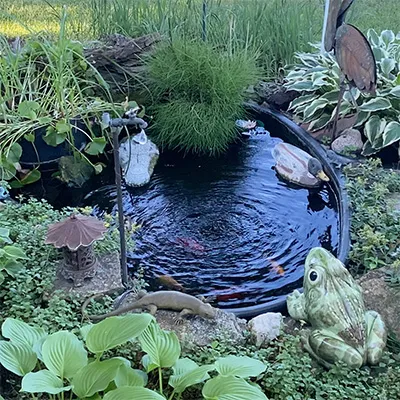
Ponds may add a decorative flair to your backyard, but they can also be a breeding ground for mosquito larva especially if they are shaded or if the water isn't cycled through with a pump. Solution: There are a couple of options for backyard ponds:
- Stock the pond with small fish that would eat mosquito larva.
- Empty the ponds and refill with fresh water once a week.
- Install a water feature that keeps the water circulating.
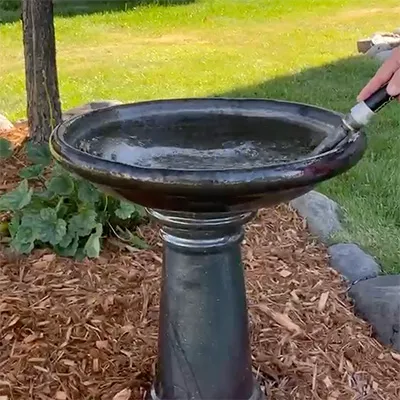
Bird Paths
The stagnant water in a bird bath is a perfect breeding site for mosquito larva. Take a few steps to make sure that your bird baths are enjoyed only by your feathered friends and not biting pests. Solution: Refresh the water in your bird bath at least once per week.
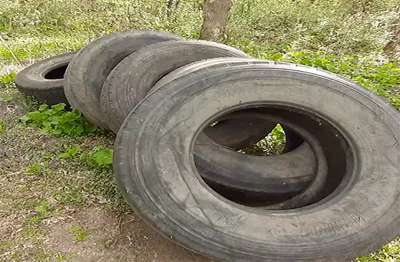
Old Tires
Tires are one of the most common breeding sources for some of the most dangerous species of mosquitoes. Rubber tires hold water easily, they stay warm in the Summer, and they can be hard to empty. Solution: You can also contact your county's environmental center or local auto repair shops, which will often recycle tires for a fee.
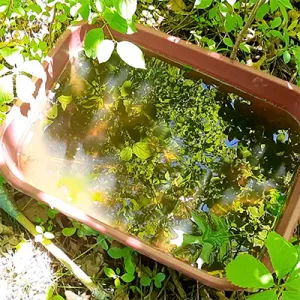
Tarps and Containers
Sometimes you may have a mosquito breeding site in your backyard without even knowing it because of a tarp, flowerpot, or bucket that happens to be holding water. Check your yard frequently to see what could be holding water after a rain. Solution: Dump the water out and remove the container or tarp when possible. If it's not possible to remove a container that holds water, just be sure to cover it before it rains.
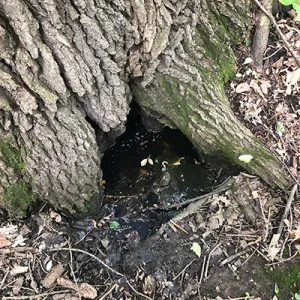
Tree Holes
One common mosquito breeding ground that people forget to check is trees that may contain holes that hold water. Check high and low on any older trees to see if there are any openings. Solution: Fill the holes with sand or an expandable foam that can be purchased at your local hardware store. You can also contact a local tree removal service or arborist.
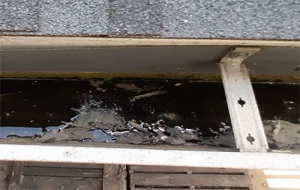
Clogged Gutters
Gutters are not designed to hold water, but once in a while - especially in the Spring and Fall they can become clogged and water will either stop draining or drain slowly. Solution: Check your gutters several times a year to ensure there are no clogs and water is not sitting.
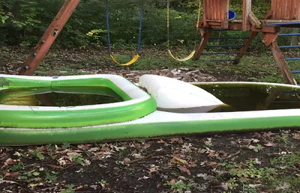
Neglected Pools
When properly maintained and regularly used, swimming pools don't pose a risk for breeding mosquitoes. However, neglected in-ground pools, hot tubs, or inflatable pools are mosquito larva hot spots. Solution: Use chlorine and regularly maintain your pool. Empty toy pools when not in use.
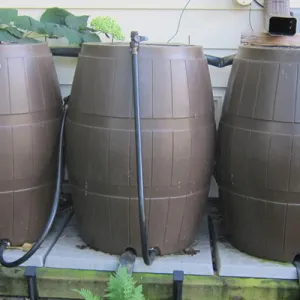
Rain barrels
Having a gutter empty into a rain barrel is a great way to save water for irrigation and gardening. However, be careful not to let an open rain barrel become a breeding ground for mosquitoes. Solution: Cover your rain barrel or purchase a screen that's small enough to prevent mosquitoes from entering. Also ensure the rain barrel gets emptied a couple of times each season.
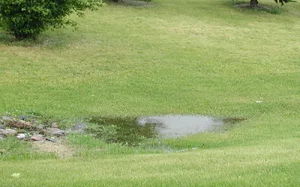
Low Spots
Sometimes there are low spots in your yard that tend to hold onto water for days after a big rain. These may seem mostly harmless, but if water tends to stand undisturbed for more than three days, these spots could produce mosquitoes. Solution: Fill these areas in and level out your yard or use larval control.
Minimize Exposure
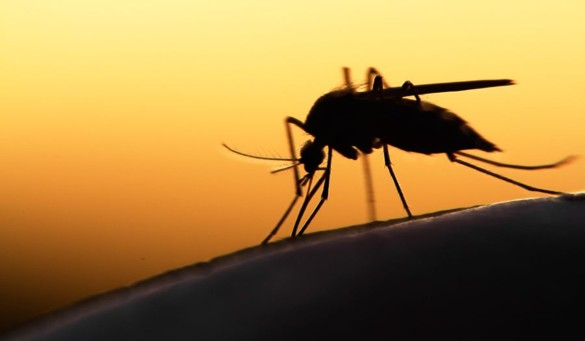
Most species of mosquitoes have heightened levels of activity around dusk and dawn. So, if possible, try avoiding areas with mosquitoes during these times.
Avoidance is not always possible; so, take some steps to minimize your exposure to mosquitoes.
Make sure all your door and window screens are in good shape. Use screened windows and doors as opposed to wide open ones that allow insects (including mosquitoes) to enter.
Loose fitting long-sleeved shirts and pants offer greater protection from mosquitoes. The loose clothing provides 'depth' so that mosquitoes cannot reach the skin to bite.
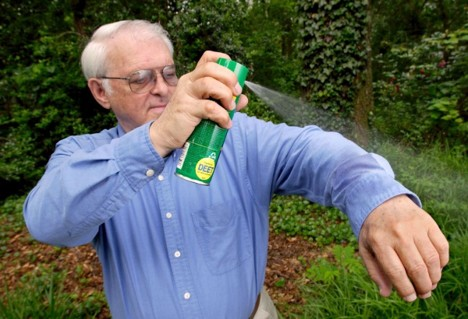
When necessary, use an approved mosquito repellent. Always follow label instructions and take special care when applying to children.

Repellents and Children
According to the label, oil of lemon eucalyptus products should NOT be used on CHILDREN UNDER 3 YEARS.
The American Academy of Pediatrics' website healthychildren.org, has advice and guidance when choosing and applying a repellent to children.
Please remember to always follow instructions on the label of the repellent.
If you are concerned about using repellent products on children you may wish to consult a health care provider for advice or contact the National Pesticide Information Center (NPIC) through their toll-free number, 1-800-858-7378 or NPIC
Precautions:
Do not allow children to handle the product. When using on children, apply to your own hands first and then put it on the child. You may not want to apply to children's hands.
If you or your child get a rash or other reaction from an insect repellent; stop using the repellent, wash the repellent off with mild soap and water, and call a local poison control center for further guidance. If you go to a doctor because of the repellent, take the repellent with you to show the doctor.
Apply repellents only to exposed skin and/or clothing (as directed on the product label.) Do not use repellents under clothing.
Never use repellents over cuts, wounds or irritated skin.
Do not apply to eyes or mouth and apply sparingly around ears. When using sprays, do not spray directly on face; spray on hands first and then apply to face.
Use just enough repellent to cover exposed skin and/or clothing. Heavy application and saturation are generally unnecessary for effectiveness.
After returning indoors, wash treated skin with soap and water or bathe. Also, wash treated clothing before wearing it again.
Repellents
The Centers for Disease Control (CDC) recommends products containing active ingredients, which have been registered with the US Environmental Protection Agency (EPA) for use as insect repellents on skin or clothing.
All of the EPA-registered active ingredients have demonstrated repellency; however some provide longer lasting protection. Additional research reviewed by CDC suggests that repellents containing DEET, picaridin, or IR3535 typically provide longer-lasting protection than the other products. And oil of lemon eucalyptus provides longer lasting protection than other plant-based repellents. In general, the more active ingredient (higher concentration) a repellent contains, the longer time it protects against mosquito bites.
Q. Why should I use an insect repellent?
A. Insect repellents can help reduce exposure to mosquito bites that may carry viruses such as West Nile virus that can cause serious illness and even death. Using insect repellent allows you to continue to play and work outdoors with a reduced risk of mosquito bites.
Q. When should I use mosquito repellent?
A. Apply repellent when you are going to be outdoors. Even if you don't notice mosquitoes there is a good chance that they are around. Many of the mosquitoes that carry West Nile virus bite between dusk and dawn. If you are outdoors around these times of the day, it is especially important to apply repellent. In many parts of the country, there are mosquitoes that also bite during the day, and some of these mosquitoes have also been found to carry West Nile virus.
Q. How often should repellent be reapplied?
A. In general you should re-apply repellent if mosquitoes are biting you. Always follow the directions. Sweating, perspiration or getting wet may mean that you need to re-apply repellent more frequently.
Q. How does mosquito repellent work?
A. Mosquitoes are attracted to people by skin odors and carbon dioxide from breath. The active ingredients in repellents make the person unattractive for feeding. Repellents do not kill mosquitoes. Repellents are effective only at short distances from the treated surface, so you may still see mosquitoes flying nearby, but if they are not biting, then the repellent is working.
Q. How does the percentage of active ingredient relate to protection?
A. Typically, the more active ingredient a product contains the longer it provides protection from mosquito bites. But, 10% concentration of one product doesn't mean it works exactly the same as 10% concentration of another product.
Example based upon a study by Fradin and Day, 2002:
- DEET Protection
- 24% — 5 hrs
- 20% — 4 hrs
- 7% — 2 hrs
Precautions:
Apply repellents only to exposed skin and/or clothing (as directed on the product label.) Do not use repellents under clothing.
Never use repellents over cuts, wounds or irritated skin.
Do not apply to eyes or mouth, and apply sparingly around ears. When using sprays, do not spray directly on face; spray on hands first and then apply to face.
Do not allow children to handle the product. When using on children, apply to your own hands first and then put it on the child. You may not want to apply to children's hands.
Use just enough repellent to cover exposed skin and/or clothing. Heavy application and saturation are generally unnecessary for effectiveness.
After returning indoors, wash treated skin with soap and water or bathe. Also, wash treated clothing before wearing it again.
If you or your child get a rash or other reaction from an insect repellent; stop using the repellent, wash the repellent off with mild soap and water, and call a local poison control center for further guidance. If you go to a doctor because of the repellent, take the repellent with you to show the doctor.
Other Information:
A wealth of information can be found at the Centers for Disease Control (CDC) website, including types of repellent, how to use repellents, repellents and children, repellents on clothing and more: Repellents (CDC).
The EPA (Environmental Protection Agency) has a webpage to obtain more knowledge about repellents for mosquitoes, ticks and other arthropods: Repellents (EPA).
People who are concerned about using repellents may wish to consult their healthcare provider for advice. The National Pesticide Information Center (NPIC) can also provide information through a toll-free number, 1-800-858-7378 or NPIC.
Repellent: Active Ingredients:
DEET (Chemical Name: N,N-diethyl-m-toluamide or N,N-diethly-3-methyl-benzamide).
Picaridin (KBR 3023, Chemical Name: 2-(2-hydroxyethyl)-1-piperidinecarboxylic acid 1-methylpropyl ester).
Oil of Lemon Eucalyptus (OLE).
IR3535 (Chemical Name: 3-[N-Butyl-N-acetyl]-aminopropionic acid, ethyl ester).
Para-menthane-diol or PMD; this is the synthesized version of oil of lemon eucalyptus.
2-undecanone.
Mosquito eating bats:
You may have heard the claim that bats eat 600 mosquitoes an hour! But what you may not know is the truth behind this claim. In 1960, D.R. Griffin, F.A. Webster, and C.R. Michael had their study published titled, "The Echolocation of Flying Insects by Bats" in the journal Animal Behavior, 8:141-154. The purpose of this study was to test and observe the echolocation of bats, not their feeding habits. So what better target than something small like mosquitoes to really test the bats ability to find prey?
Methods:
Only 'proven hunters' were used. The scientists made sure to use bats that they had observed to be active and aggressive hunters for their study.
The testing room was 8 feet by 16 feet in size, without obstacles to interfere with observing the bats.
Hunting sessions were only 10-15 minutes in length.
2,000 mosquitoes, and only mosquitoes, would be released into the testing room.
Results:
One bat did achieve capturing 9.5 mosquitoes per minute (average). This same bat on another testing round captured only 1.7 mosquitoes per minute (avg).
The scientists (in their study) did not list every foraging attempt. They did however record that "On other occasions the same bats gained very little, or even lost weight while flying in the same chamber."
The one time that one bat achieved the 9.5 mosquitoes per minute capture rate was what was used to later come up with the claim that "bats eat 600 mosquitoes per hour".
Conclusion:
We definitely agree with the assertion that bats will feed upon mosquitoes, but based upon numerous other studies, we believe it has been shown that bats are opportunistic feeders and are not an effective or reliable form of mosquito control.
Our concern is the misinformation that comes from taking one sentence out of an entire study and then making wide sweeping assumptions that may affect the publics' perception on what are effective mosquito control tactics.