- Larval Control (Stop Them Before They Hatch)
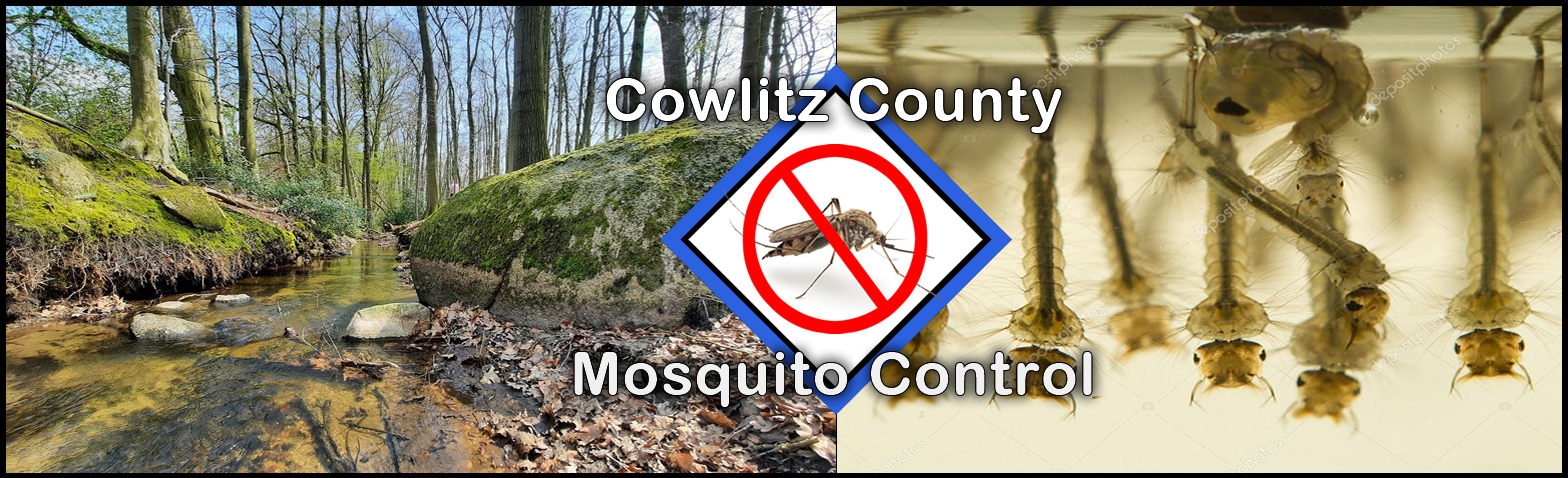
The most effective and least costly method is eliminating the immature stages before they emerge as flying, biting adults.
- Habitat Removal: Eliminate standing water in your yard by checking gutters, bird baths, flowerpots, and old tires.
- Larvicides: For unavoidable water sources (like ponds or rain barrels), apply EPA-approved larvicides (such as Bti dunks) which target larvae without harming people or pets. The preferred long-term and most cost-effective mosquito control strategy is to eliminate larvae before they become adults. This method comprises the majority of the district's workflow. District staff apply Bti, Bs, Methoprene, and Spinosad to control mosquito larva throughout the district.
- Biological Control: Introduce live mosquito fish (Gambusia) into larger ponds or water features to eat the larvae
- Physical & Structural Barriers
Because common species like the Aedes mosquito readily bite indoors, structural barriers are crucial.
- Screens: Install and repair tight-fitting screens on all windows and doors.
- Airflow: Because mosquitoes are weak flyers, using high-speed cordless or structural fans on your patio significantly disrupts their ability to navigate to you.
- Personal Repellents
When spending time outdoors, protect your skin by applying EPA-registered insect repellents:
- DEET: Safe and effective up to 30% concentration for all ages.
- Alternatives: Picaridin, IR3535, or Oil of Lemon Eucalyptus (OLE) provide excellent, scientifically backed protection. OLE should not be applied to children under 3.
- Note: Apply repellent over your sunscreen, not underneath.
- Yard Treatments & Traps (Adulticides)
For heavy infestations, adults can be targeted directly.
- Barrier Spraying: Professional and DIY foggers use adulticides (often pyrethroids) to coat foliage and resting areas where mosquitoes hide during the day.
- Mosquito Traps: CO2 or suction traps draw mosquitoes in and are excellent for keeping populations low in specific localized zones.
- Adulticiding: When larviciding is not an option, adulticiding applications may be necessary to reduce the risk of nuisance mosquitoes or mosquito-borne illness. Adulticiding is done by the means of a pick-up truck, mounted with an Ultra-Low Volume (ULV) aerosol generator (sprayer). Adulticiding is a temporary control over the flying mosquitoes and will knock down mosquito populations that could potentially be carrying virus. When adulticiding by truck; our control operators are equipped with an array of technical data that aids them in their application. This includes, current GIS mapping systems, registered ‘Spray Exemptions', and specifics relative to each property. The product is emitted in microns from the ULV sprayer and is applied after sunset. The mist expands up to 300 feet while the truck travels down the road. This is a quick application to kill the current flying mosquitoes only and does not leave a residual. We record our route, materials used, quantity and location.